
A complete pricing guide for schools, estates, and homeowners
Building a tennis court is a long-term investment, and understanding the costs upfront helps you plan properly and avoid unexpected surprises.
This guide explains the main factors that influence tennis court pricing in Gauteng so you can budget with confidence.

What Affects Tennis Court Cost?
The final price depends on several site-specific conditions:
Ground conditions and soil stability
Site access for trucks and machinery
Drainage design and slope correction
Required asphalt thickness
Type and quality of sports coating
Fencing height and materials
Lighting options
Location and travel distance
Every project is unique. A professional site inspection is essential for accurate costing.
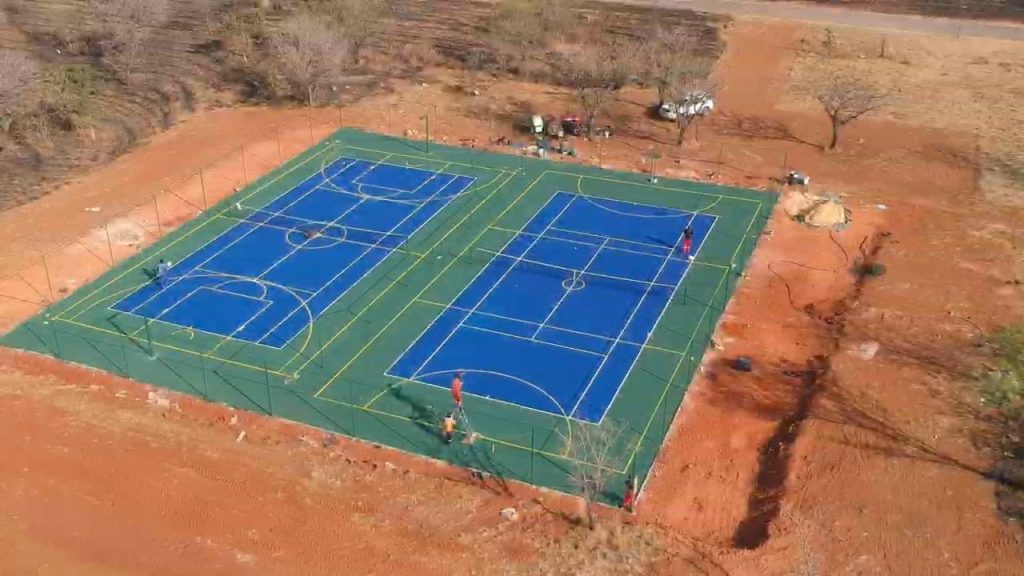
Base Construction Cost
A strong, well-engineered base is the most important part of any tennis court.
It prevents cracks, surface failures, and future sinking.
Base construction includes:
Site clearance and excavation
Layered sub-base construction
Heavy compaction with rollers
Precision leveling for correct water runoff
Because long-term strength comes from below the surface, this is typically the largest part of the budget.
Asphalt Surfacing Cost
Most professional tennis courts in South Africa use hot asphalt as the primary surface.
Benefits of asphalt:
Smooth and predictable ball bounce
Long-lasting durability
Low maintenance requirements
Asphalt must be installed at the correct thickness depending on foot traffic and the areas surrounding the court.
Acrylic Sports Coating Cost
Acrylic coating transforms the asphalt into a playable, professional-quality court.
Coating benefits:
Player grip and traction
Protection from heat, UV, and rain
Bright, attractive colours
High visibility for lines and ball tracking
Popular colour options:
Green
Blue
Red clay look
Two-tone combinations (most popular for clubs & schools)
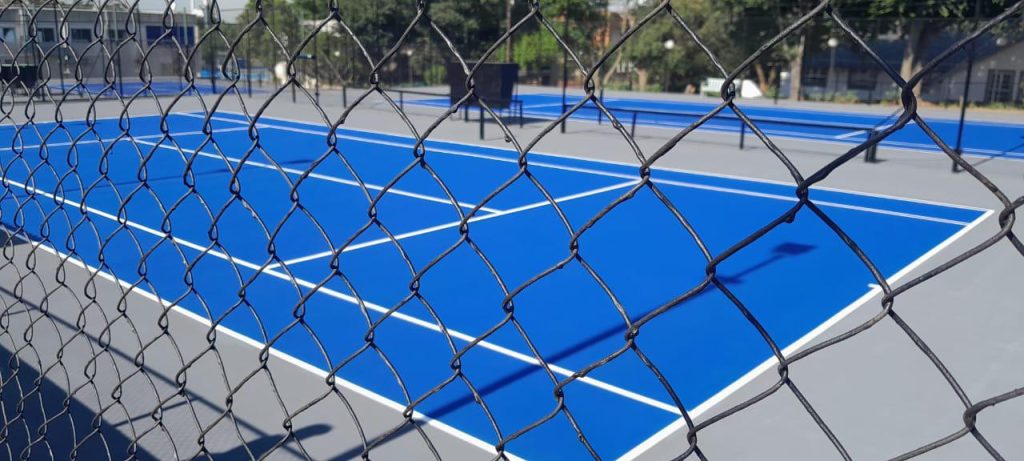
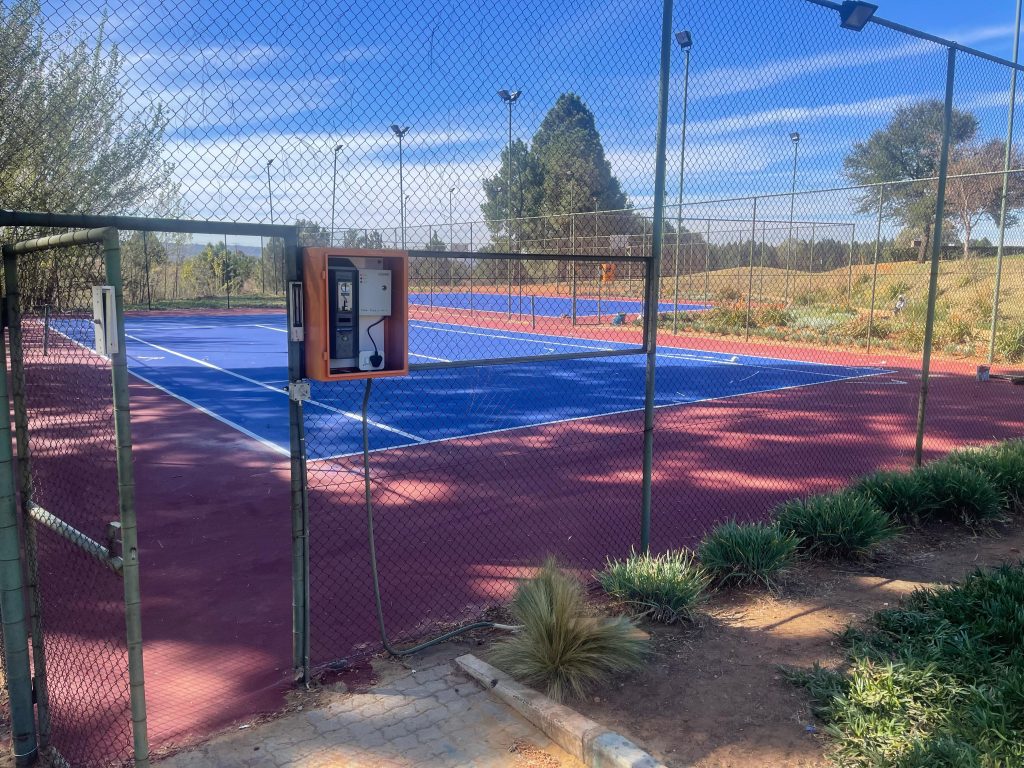
Fencing and Gate Cost
Fencing keeps the court safe and secure, preventing balls from escaping.
Standard options:
3 m or 3.6 m high fencing depending on level of play
Available extras:
Wind netting
Security or lockable gates
Powder-coated posts for long-term corrosion resistance
Optional Extras That Affect Price
LED lighting for night play
Drainage channels around the court
Benches and player seating areas
Baseboard edging
Custom lines, designs, or logos
Typical Price Range in Gauteng
(Approximate guideline varies depending on site conditions)
Standard asphalt tennis court with acrylic coating
From R550 000 – R900 000
(Complete construction + finishing)
Lower costs on:
Flat, stable sites
Easy access for machinery
Minimal excavation
Higher costs when:
Ground is unstable
Retaining walls are required
Space is tight for construction vehicles
Fencing and lighting are included
A site assessment is the only way to provide an accurate project quote.
What You Get for Your Investment
A professionally constructed tennis court should last 15–25 years, with basic maintenance such as:
Recoating every 5–7 years
Crack repairs when needed
Regular drainage upkeep
A correctly built court offers:
Perfect, consistent ball bounce
A safe playing surface
Clean, professional appearance
A valuable upgrade to any property or facility
Common Mistakes That Increase Costs Later
Avoid contractors who:
Apply thin asphalt layers
Skip proper base preparation
Ignore drainage slopes
These shortcuts cause cracks, pooling water, and expensive repairs—often within the first year.
Choose quality from the start to save money long-term.
Ready to Plan Your Tennis Court?
William Gift Civil builds high-performance tennis courts for:
Schools
Sports clubs
Private homes
Estates and developments
We deliver quality that lasts.
📞 Call or WhatsApp: +27 82 428 1251
William Gift Civil – We Build Quality That Lasts