
Why correct slope is critical for performance and lifespan
Water is the number one cause of long term tennis court damage. If it remains on the surface for too long, it slowly weakens the base, creates cracks and forms slippery areas that put players at risk. In Gauteng’s climate, proper drainage and level design are two of the most important elements in any new court or resurfacing project.
Why drainage is so important
When drainage is not planned or installed correctly
Water begins to seep into the base
The asphalt softens
Cracks and dips start to appear
The acrylic coating begins to peel or bubble
The court becomes unsafe for players
Good drainage protects the structure, keeps the court dry and ensures it performs well for many years.
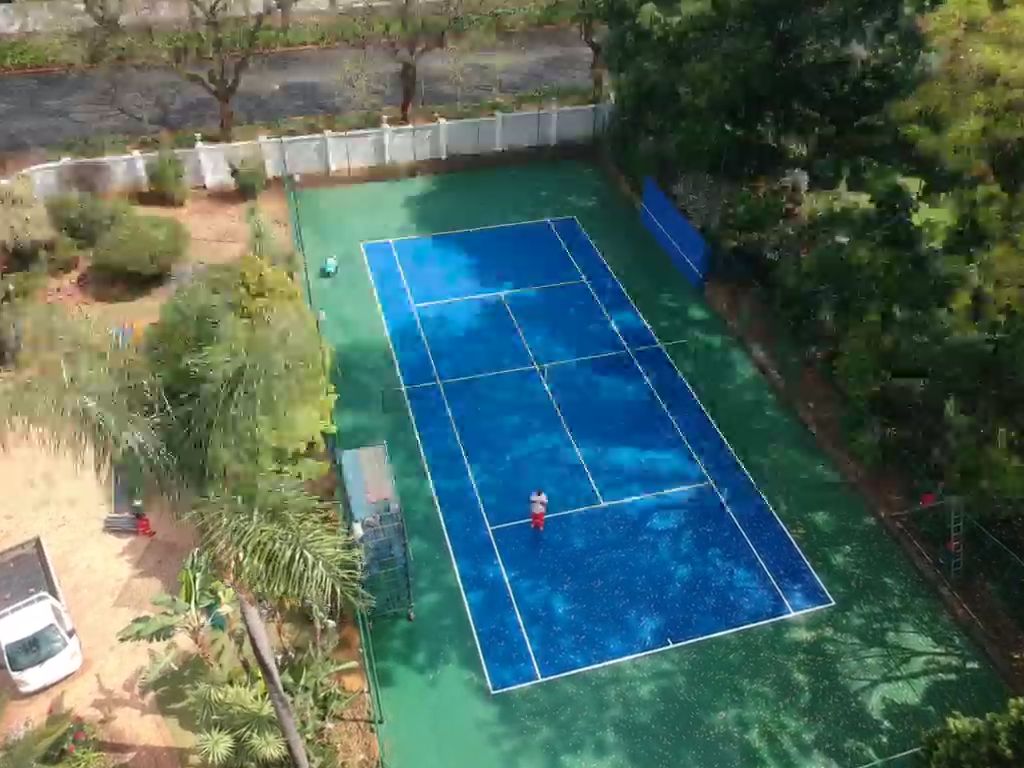
Correct slope design for tennis courts
A tennis court should look perfectly flat, yet it never is.
A gentle fall is always built into the surface to move water away without affecting how the ball bounces.
The recommended slope is
1 percent to 1.5 percent fall
Water must move
Away from the main playing area
Toward the edges and proper drainage points
Never toward any building or fence line
A professional builder sets this slope before a single layer of asphalt is installed.
Where water usually causes problems
Certain areas tend to show weakness first, especially when drainage is not perfect.
Common problem spots
Around the net line
Baseline areas where players spend the most time
Corners of the court
Edges where trees or roots are nearby
Even a small two to three millimetre ponding spot is a sign of future trouble and should be fixed early.
How proper drainage is achieved
✓ Correct excavation and shaping of the base
✓ A layered sub-base with solid compaction
✓ Smooth asphalt applied to the designed slope
✓ Drainage channels or open paths at the edges
✓ Keeping surrounding ground clear so water flows freely
Effective drainage begins underneath the surface, not just on top of it.

Signs your court has drainage issues
Water staying on the court for more than ten minutes after rainfall
Small dips that slowly get larger
Moss or algae growing in one specific area
The surface feeling soft underfoot after rain
Fine cracks spreading outward from low spots
These early indicators mean the base is holding water and needs attention.
Best way to fix drainage problems
Regrading and patching
Low areas are cut out, the base is re-compacted and new asphalt is placed to match the correct level.
Full resurfacing
When there are widespread drainage issues, resurfacing the entire court restores proper slope, structure and playing quality.
The new acrylic coating completes the fresh surface.
Avoid drainage mistakes
Never allow
✘ A flat tennis court
✘ Thin or poorly compacted base layers
✘ Trees planted too close to the edges
✘ Contractors ignoring slope design
✘ Water draining toward buildings or fences
Drainage planning must happen at the design stage long before construction begins.
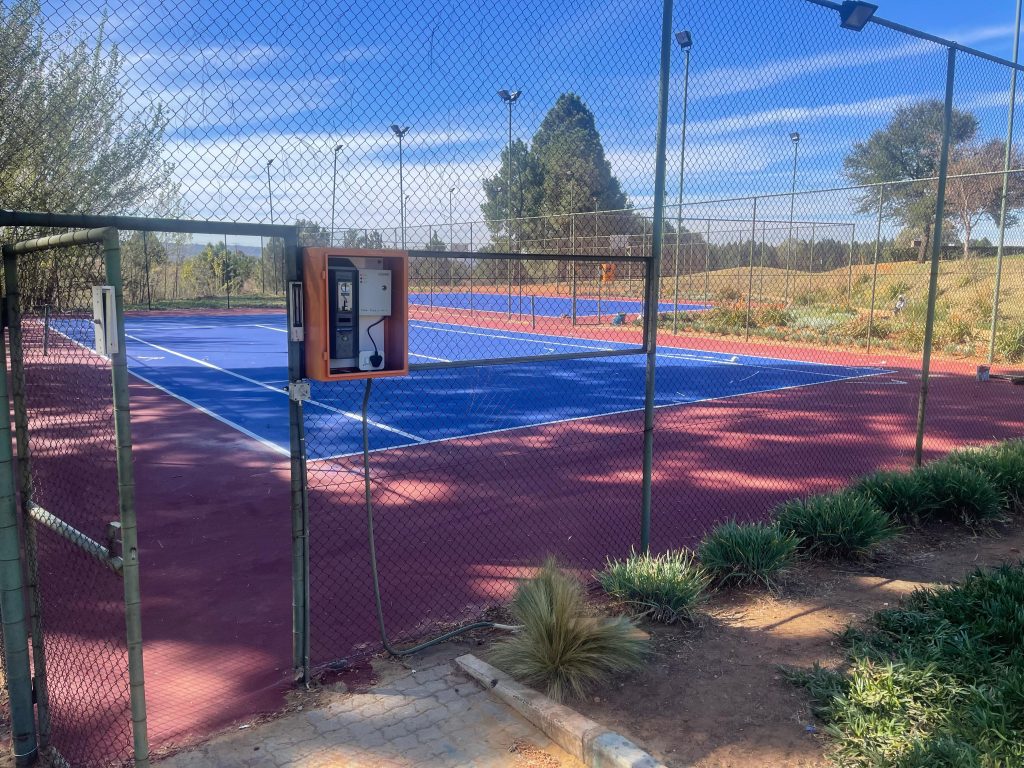
How long a well-drained court lasts
When built correctly with proper slope and water flow, a tennis court can last fifteen to twenty five years.
Only small repairs and occasional resurfacing are needed to keep it performing at its best.
Good drainage is the foundation of long lasting quality.
Build your court right the first time
William Gift Civil designs and installs professional tennis courts with correct slope and reliable drainage suited for South Africa’s climate.
We also repair existing courts with drainage and level issues.
📞 Call or WhatsApp: +27 82 428 1251
We Build Quality That Lasts