
What schools, clubs and property owners must know
A tennis court is a major investment, and building it correctly from the start ensures long lasting durability and excellent playing performance. Gauteng’s climate requires a court surface that can handle heat, rain and consistent player movement throughout the year.
This guide explains how a professional tennis court should be designed and constructed in South Africa.
Step 1: Correct base construction
The foundation is the most important part of the court.
If the base fails, the entire structure begins to crack.
A strong base includes
Removing vegetation and weak soils
Placing strong, stable sub base layers
Compacting with a heavy Bomag roller
Shaping the correct slope for drainage
Accurate level control using laser equipment
A stable base prevents sinking, uneven bounce and long structural cracks.
Step 2: Asphalt court surfacing
Asphalt is the most trusted tennis court surface worldwide because it provides
Strong structural support
Smooth and consistent ball bounce
Long lifespan under heavy use
Low maintenance requirements
The asphalt layer must have the correct thickness for its intended usage
Residential courts
School courts
Club or high performance courts
A thicker asphalt base means a longer lasting court.
Step 3: Acrylic sports coating
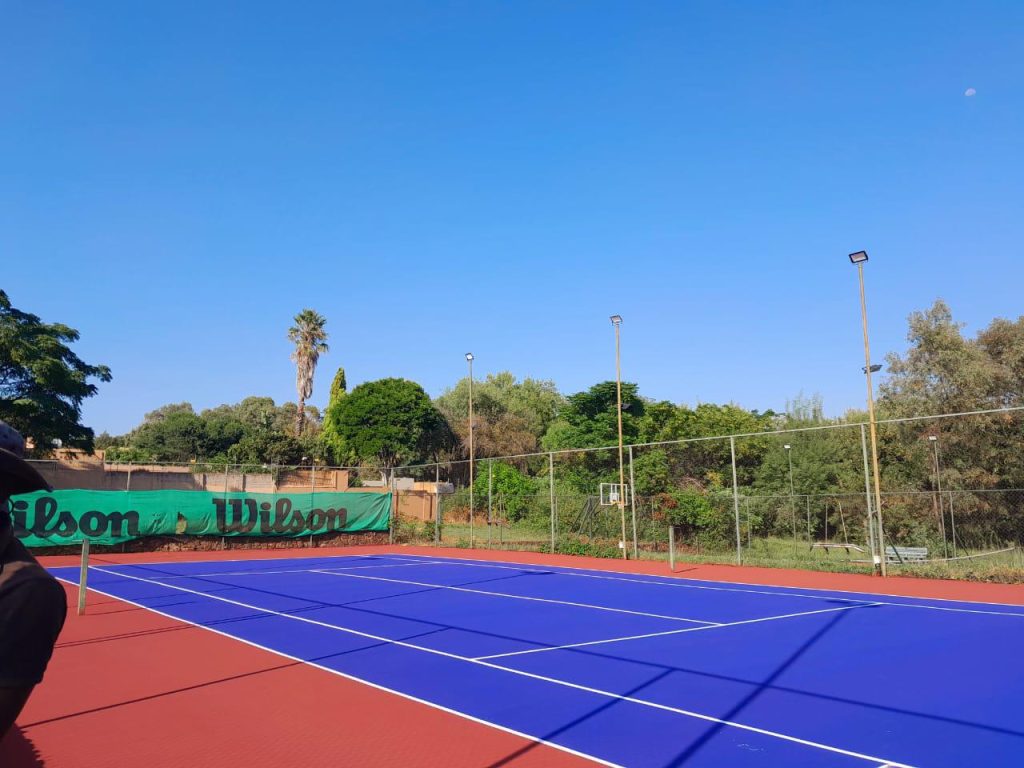
Acrylic coating converts the asphalt base into a professional, safe and visually appealing playing surface.
Benefits
✔ Safe traction for fast movements
✔ UV protection against harsh South African sunlight
✔ Excellent ball visibility
✔ Bright, modern colour finish
✔ Waterproofing and extra protection during rain
Popular colour combinations
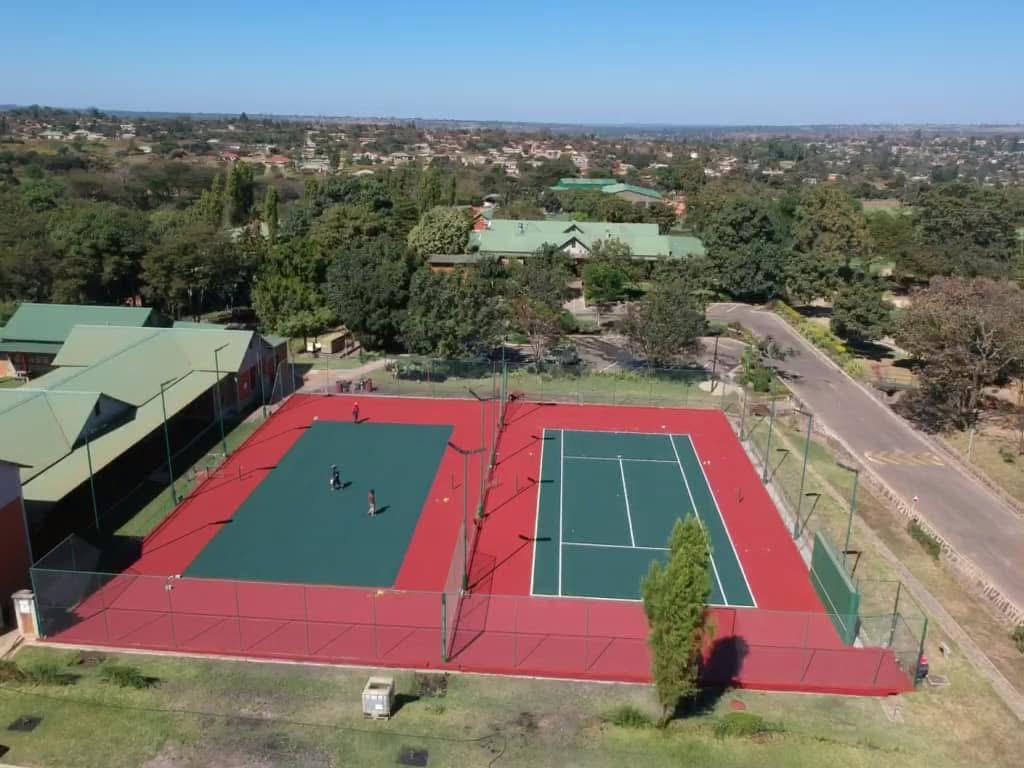
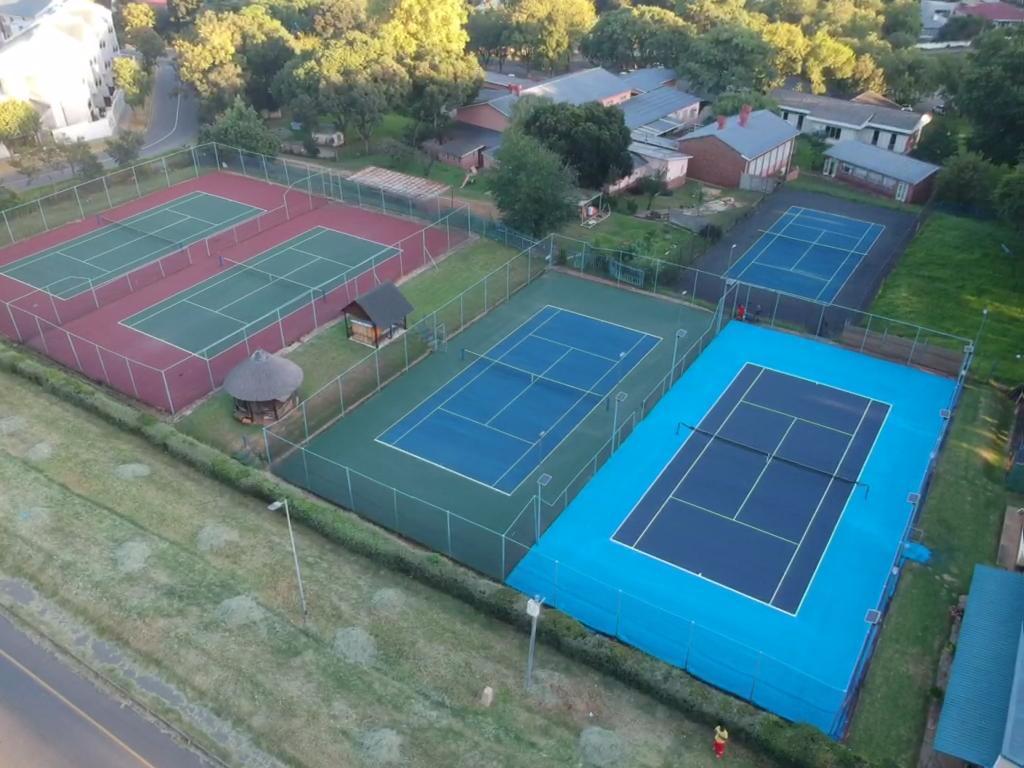
Blue playing zone with green outer zones
Classic full green courts
Red clay look for premium estate courts
Step 4: Line marking to SA standards
Line markings must follow Tennis South Africa regulations.
Requirements
Correct width and accurate placement
Bright white acrylic line paint
Non slip finish
Straight, professional alignment
Accurate lines improve fairness, confidence and overall match quality.
Step 5: Net posts and fencing
Correct installation ensures both safety and long term performance.
Requirements
Posts fixed deep into anchored sleeves
Fencing between three and three point six metres high
PVC coated mesh for durability
Gates positioned for easy access
Optional windbreak mesh for privacy and reduced wind impact
High quality fencing keeps the court secure and visually neat.
Optional upgrades for a luxury finish
LED lighting for night tennis
Courtside benches and spectator seating
Custom branding or logos
Multi sport line markings (tennis plus netball)
Retaining walls where ground levels are uneven
These additions elevate a standard court into a premium sports facility.
How long a new court lasts
With correct construction and routine maintenance, a tennis court can last fifteen to twenty five years.
Typical maintenance includes
Recoating every five to seven years
Sealing small cracks early
Keeping drainage flowing properly
Long term value depends on choosing a contractor with the right expertise.
Why schools and estates choose asphalt courts
✔ Fast installation
✔ Safe for players of all ages
✔ Easy to maintain
✔ Ideal for daily training and heavy use
✔ More affordable than imported systems
Asphalt courts perform reliably under high traffic conditions.
Build with professionals who understand performance
William Gift Civil designs and constructs high quality tennis courts across Gauteng.
We handle the complete project — from base works and surfacing to line marking, fencing and lighting — with guaranteed workmanship.
Call or WhatsApp
+27 82 428 1251
We Build Quality That Lasts