
Height, safety rules and best options for South Africa
Fencing is an essential part of every tennis court. Without it, balls constantly leave the court, players are exposed to unnecessary risks and the entire facility feels unfinished. A proper fencing system improves safety, protects the surroundings and keeps the court looking professional for many years.
This guide outlines the best fencing designs for tennis courts in Gauteng and what you should consider before installation.
Why fencing is important
✔ Stops balls from leaving the play area
✔ Protects spectators, windows and nearby structures
✔ Prevents unauthorised access
✔ Adds privacy and improves security
✔ Helps reduce wind interference
✔ Keeps the court neatly enclosed
The right fencing design creates a safe and enjoyable playing environment.

Recommended fencing height
The standard height for tennis court fencing is three metres to three point six metres, depending on player intensity and nearby structures.
Schools and clubs generally choose three point six metres for added safety
Private homes may use three metres when space is limited
Taller fencing prevents balls from clearing the top during fast baseline rallies.
Best fencing materials for durability
PVC coated weld mesh fencing
This is the most recommended option in South Africa.
Benefits
Long lifespan
Resistant to rust
Low maintenance
Strong impact resistance
Clean professional appearance
Available in green or black to match court colours.
Chain link fencing
A more affordable alternative that works well for budget projects.
Still strong, but requires more maintenance over the years.
Support posts and gates
Posts must be set deep into concrete to handle strong winds and heavy use.
Gates should include
Self closing hinges
A secure locking system
Enough width for maintenance equipment
A poorly installed gate is usually the first part to fail, so professional fitting is important.
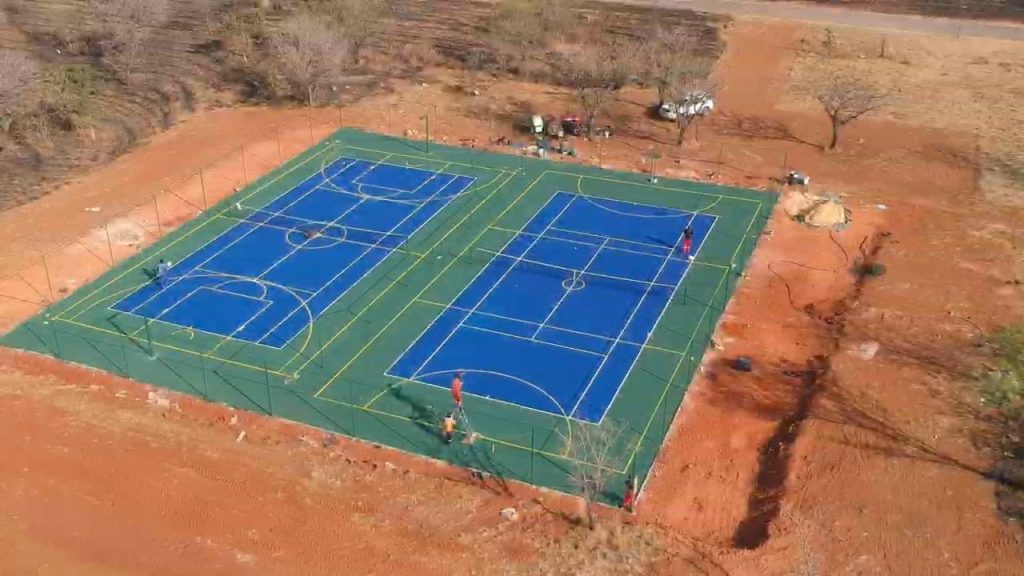
Windbreak mesh options
Windbreaks improve ball visibility, reduce wind interference and add privacy.
Benefits
✔ Better focus for players
✔ A cooler playing environment
✔ More professional appearance
These are usually installed along the side fencing rather than the ends to avoid blocking airflow completely.
Safety spacing and access layout
Good fencing design ensures
Safe distance between the court lines and the fence
Comfortable walking space around the court perimeter
Emergency access where necessary
A clear viewing area for coaches or spectators
Thoughtful layout improves the overall flow and usability of the facility.
Colour choices for court fencing
Green blends naturally with gardens and landscaping
Black creates a modern premium appearance
Silver or galvanised finishes are strong but not as visually appealing
Most schools and estates choose green or black to complement the acrylic court colours.
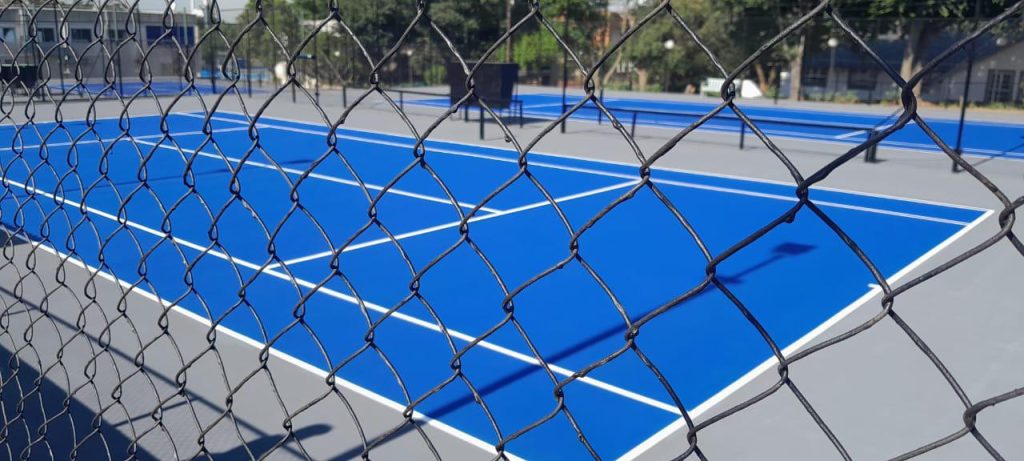
How long fencing lasts
A professionally installed PVC coated fence can last ten to twenty years, with basic care such as
Checking posts after storms
Repairing damaged mesh early
Light cleaning to remove dust and dirt
Include fencing in your upgrade plan
If your court is being resurfaced, it is the ideal time to upgrade your fencing as well.
A worn fence can make a newly resurfaced court look old, while upgrading both together creates a complete, modern and safe facility.
Professional fencing installation in Gauteng
William Gift Civil supplies and installs complete tennis court fencing systems for
Schools
Sports clubs
Private homes
Residential estates
We handle posts, mesh, gates and windbreaks with workmanship designed to last.
Call or WhatsApp
+27 82 428 1251
We Build Quality That Lasts